We left our lovely lake view home this morning and headed out for more adventure. But first we stopped at Ma Boulangerie to fortify ourselves with some good croissants. We had a hard time choosing which ones to get and finally decided we would each get one for now and one for later. There was no indoor seating and it was quite cold. So we sat in our rental car eating our croissants, covering our laps in crumbs.
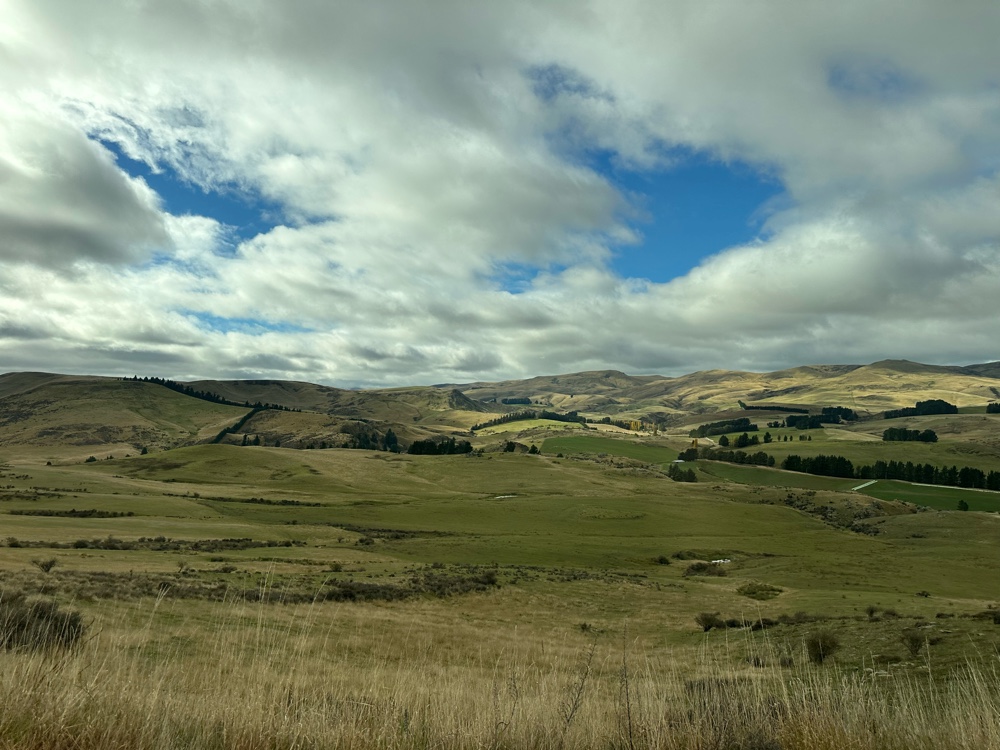
When Gayle checked us out of the hotel the woman at the front desk suggested that the best route to Dunedin was through Middlemarch. This was not even a route we had considered but we decided to trust a local’s suggestion. It was a lovely drive: rolling hills, lots of sheep, no tourists. We traveled most of the way to Dunedin without another motorist pushing us to go faster. It was beautiful in a different way than Queenstown: lake, snowy mountains, lots of tourists.
Gayle suggested as we drove to Dunedin that we should list the ways that New Zealand feels so civilized. Here is the beginning of our list:
Motorists don’t honk
People often say, “No worries”
Art galleries and botanical gardens are free
Tax is built into the price you see
No tipping, we are told people get a livable wage here.
Self-service washers and dryers in hotels come with soap
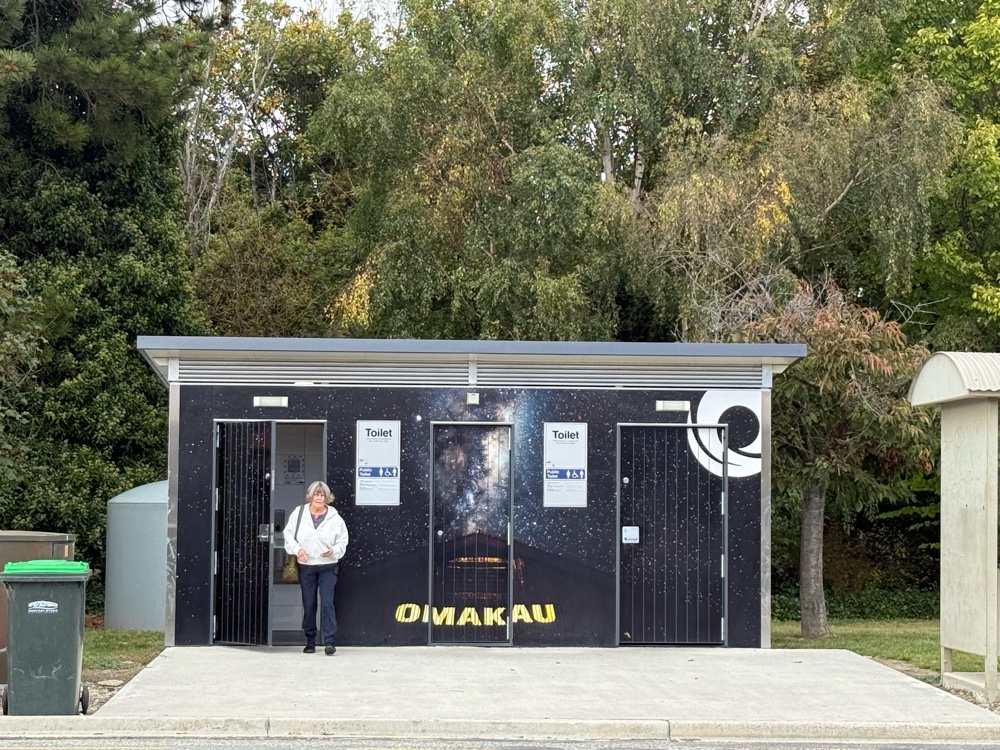
And every town has a sign pointing you to the public restrooms, which are clean!
We arrived in Dunedin to our hotel, Distinction Dunedin, in time for Gayle to take a nap. I headed out to explore Dunedin, which means “fort of Edin” in Scottish Gaelic, named for Edinburgh, Scotland. In Maori the city is named Otepoti, but unlike other cities we have visited the Maori name is not prominently displayed. Archaeological evidence points to this area being the first place the Maori lived in New Zealand, around 1250-1300 AD. Europeans arrived in the 1830s and a Scottish settlement was established in 1848 by the Free Church of Scotland. By the end of the 1850s, 12,000 Scots had emigrated to Dunedin. The architecture here feels very different than any other place we have visited on this trip.
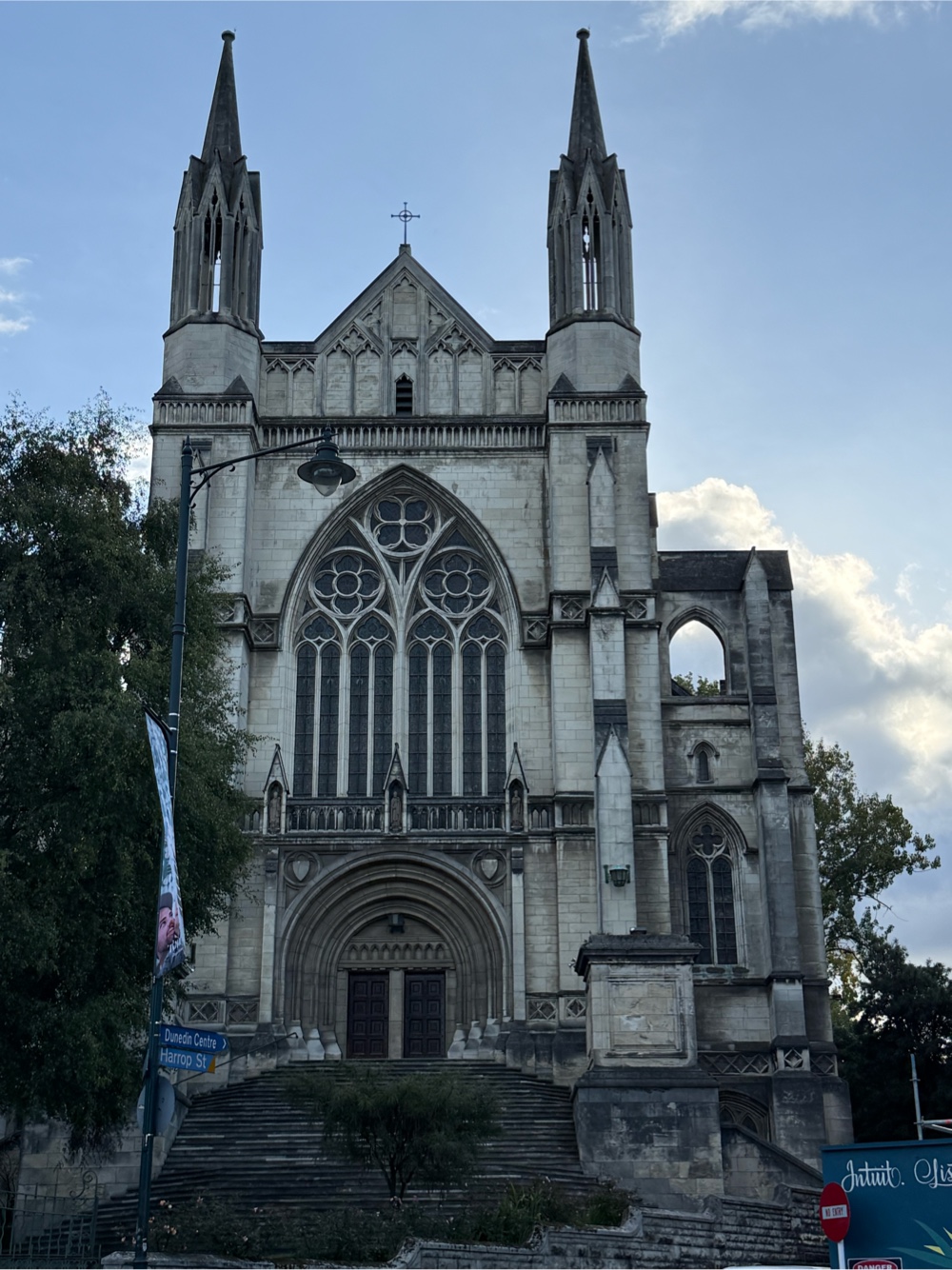
As I walked around the city, I was struck by the number of impressive churches. This is St. Paul’s Anglican Cathedral. The original building was built in 1863. It wasn’t well designed and this building was completed in 1919. I had read that it had impressive stained glass windows but I was too late to get inside.
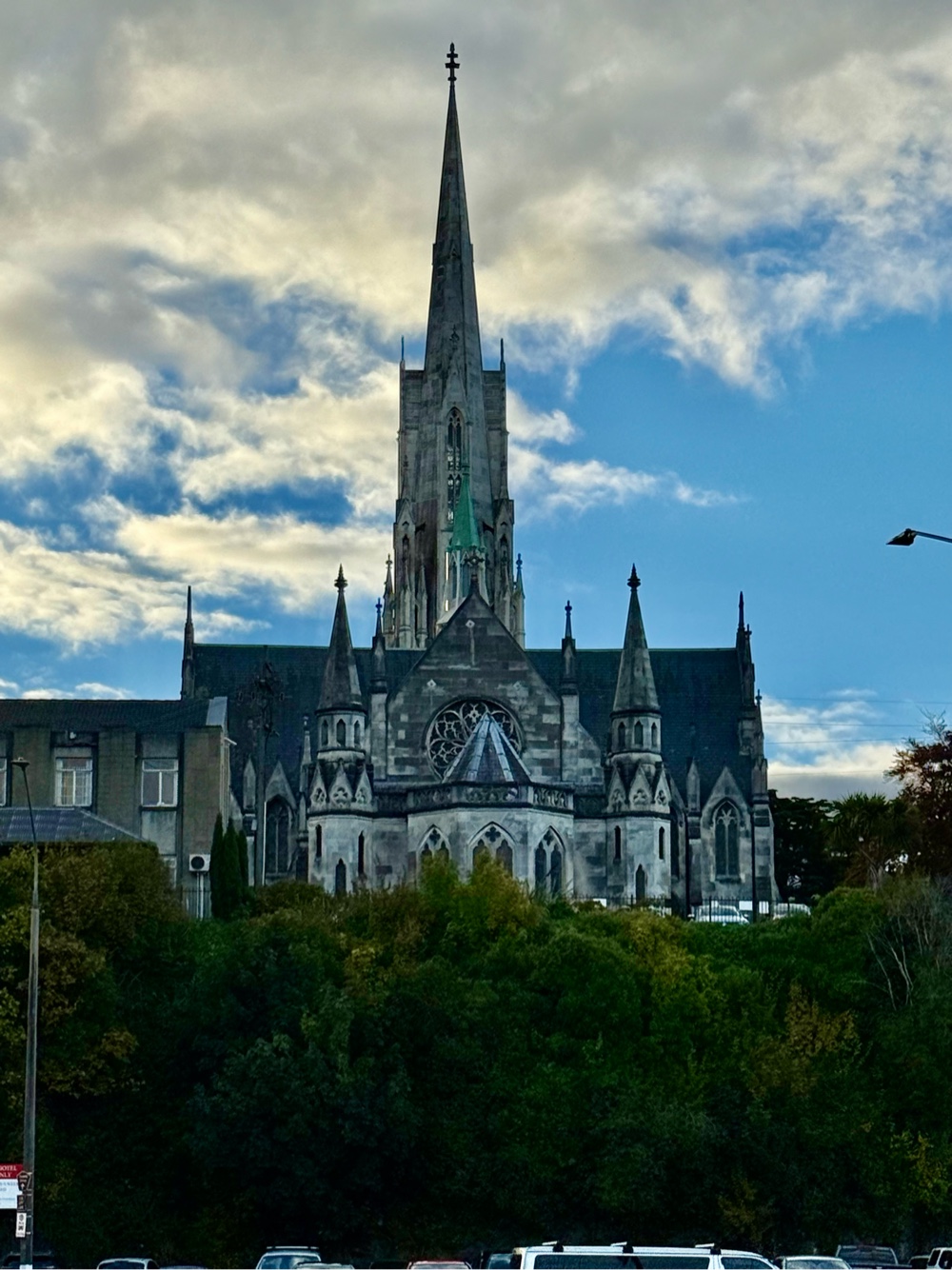
This is First Church of Otago (Presbyterian) . It is regarded as one of the most impressive nineteenth century churches in New Zealand.
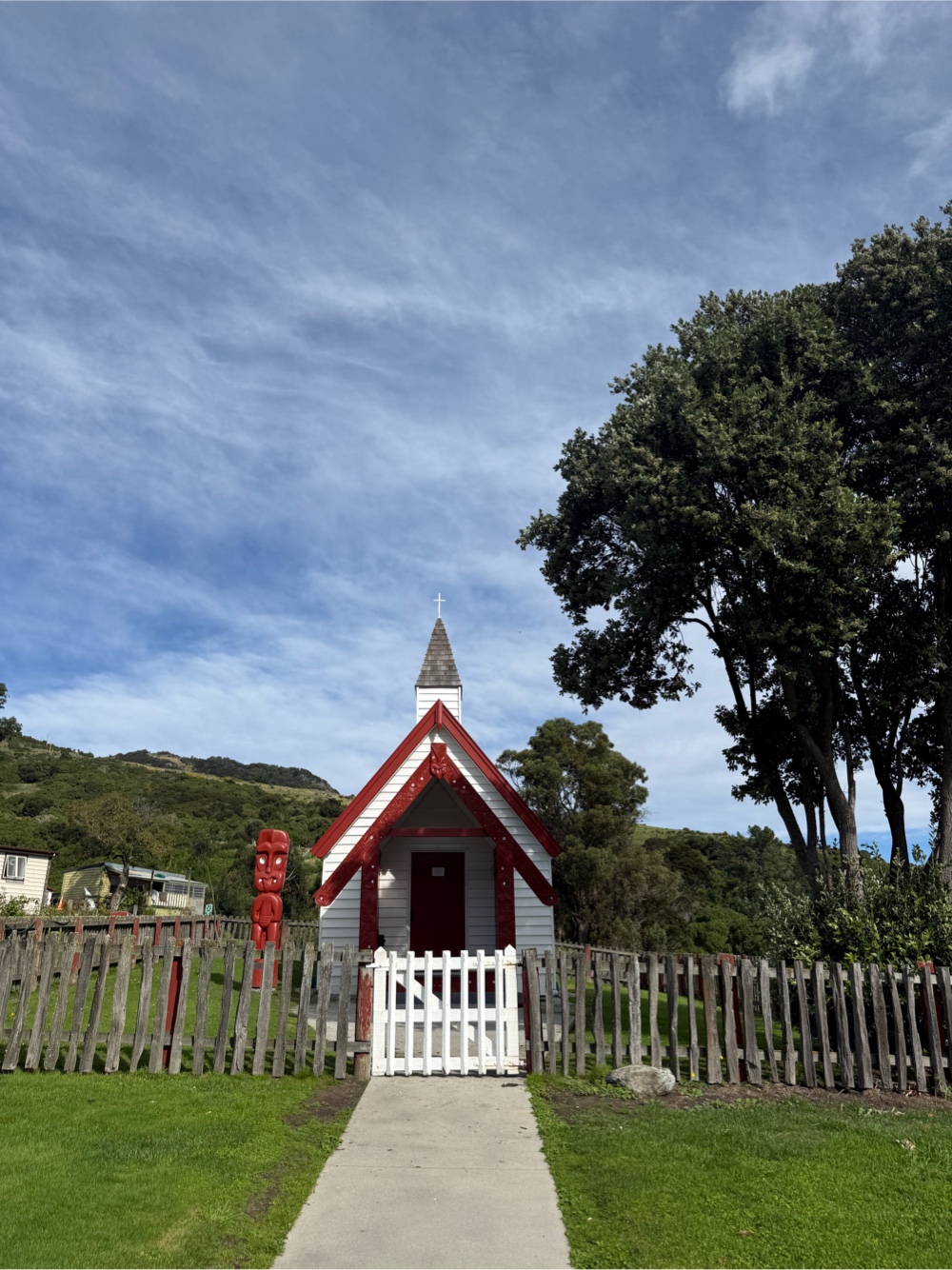
I kept thinking back to the simple structures of the sacred gathering places of the Maori people. This is the Maori marae I saw back in Akaroa. I could feel the difference.
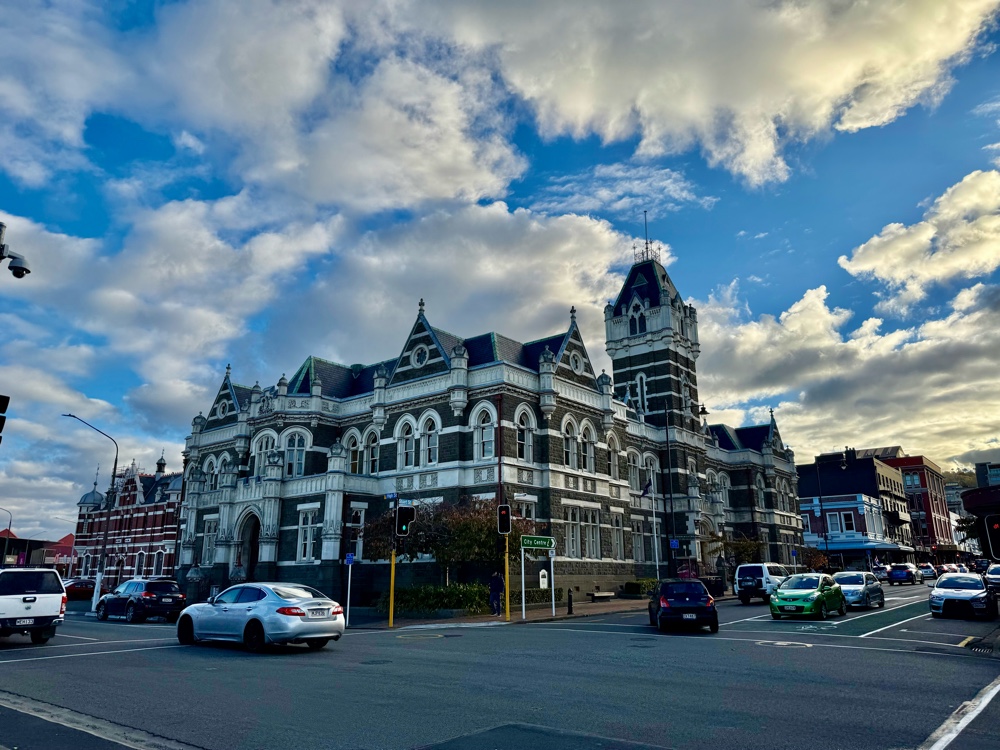
I walked past the Law Courts and police station.
This car was parked in front of the police station. I would love to know what the story is behind it.
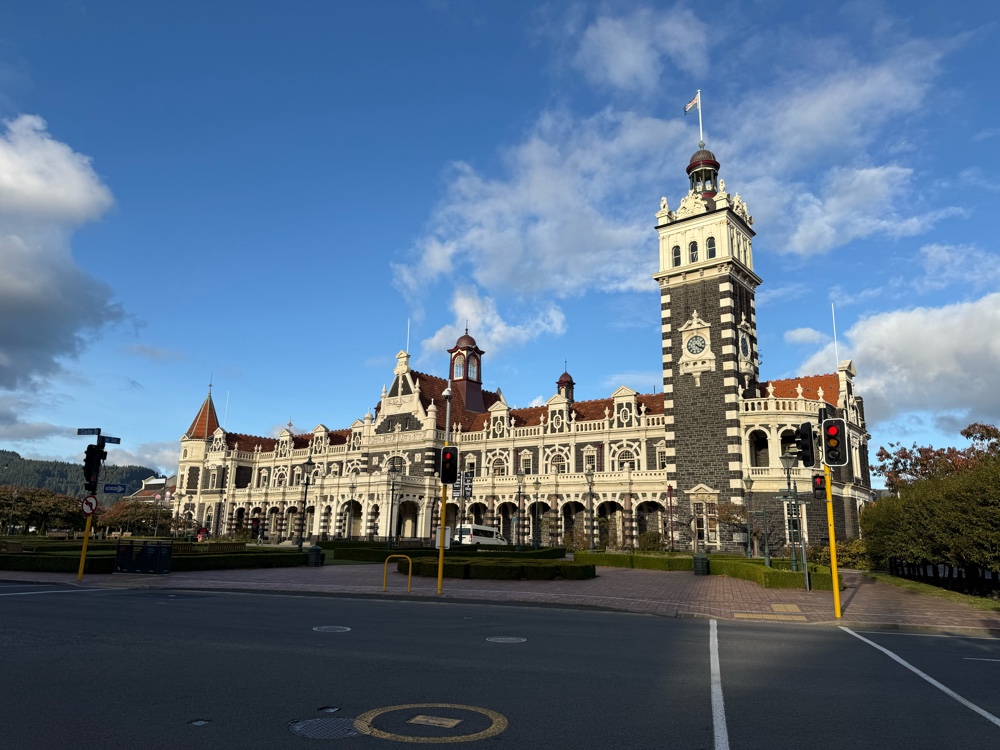
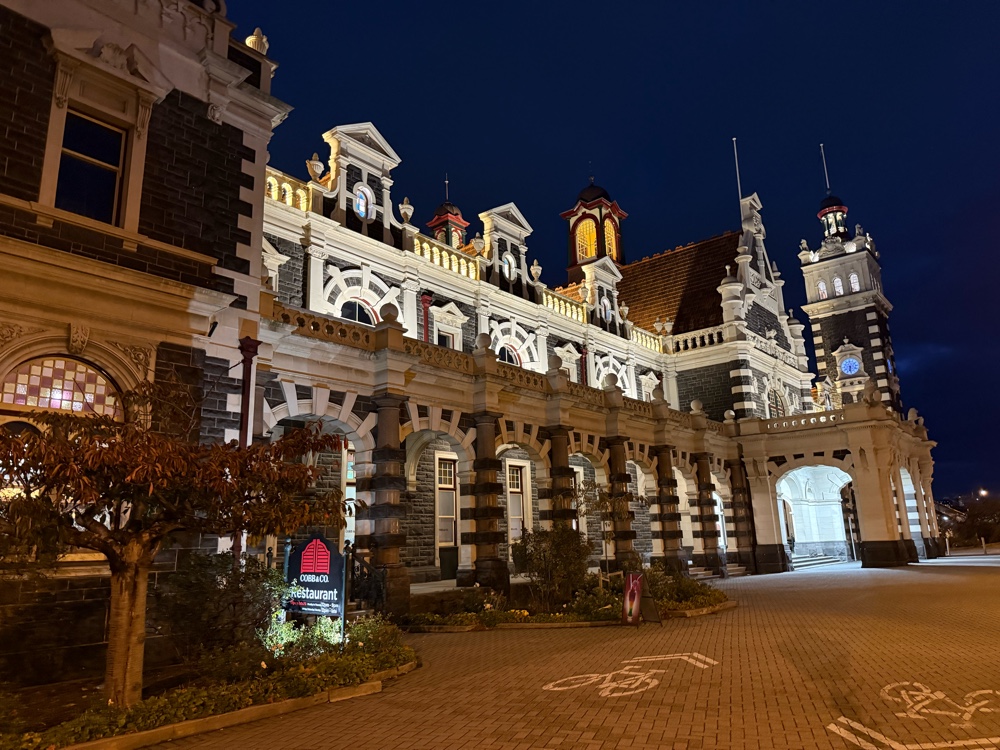
My real goal was to walk to the Dunedin Railway station. Locals believe it is the most photographed building in the country.
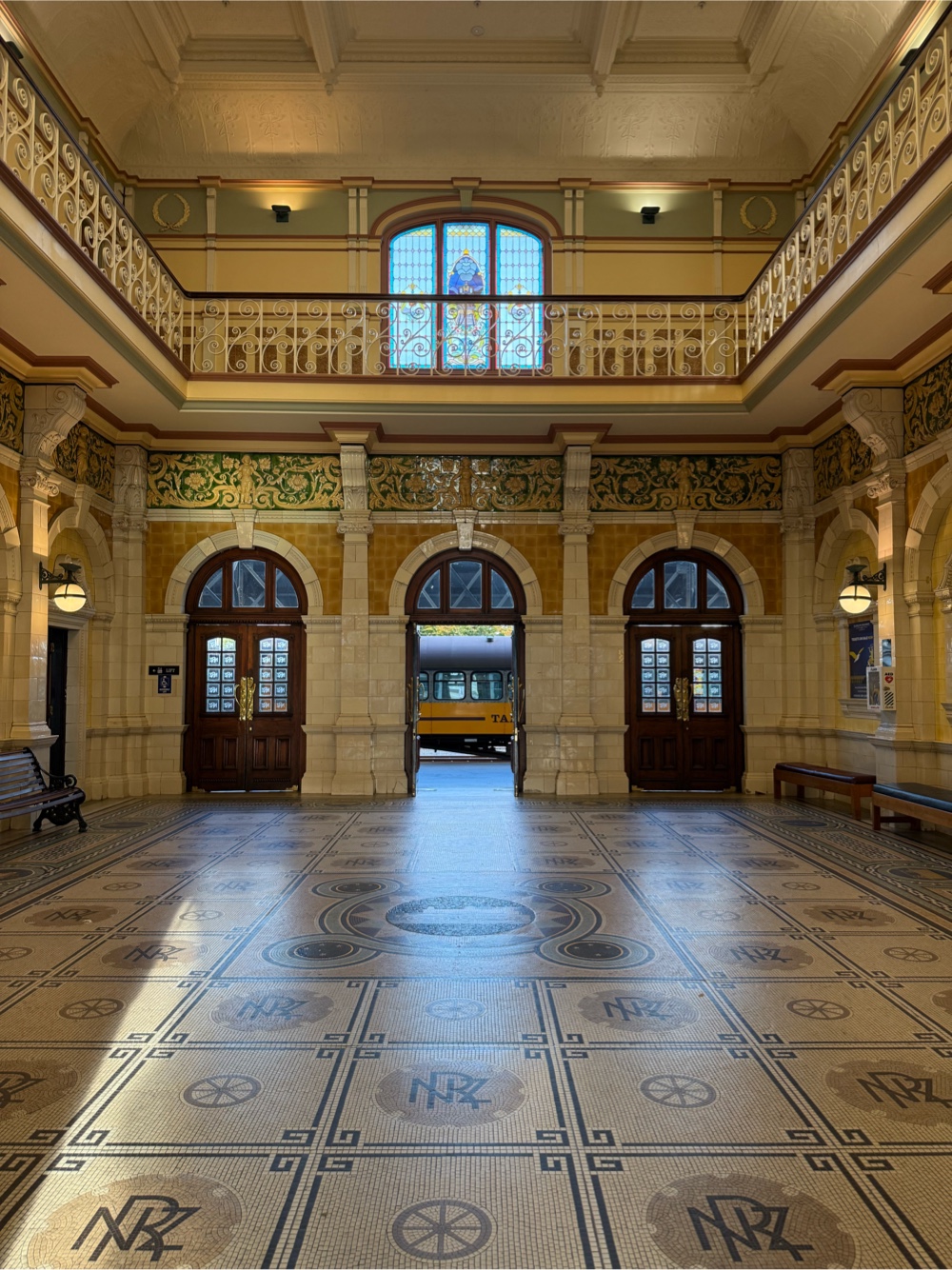
It was constructed in 1906 and at one time New Zealand’s busiest station, serving up to 100 trains a day. Currently it operates three tourist train lines. It is beautiful inside. Besides the train ticket office it houses an art gallery and a restaurant.
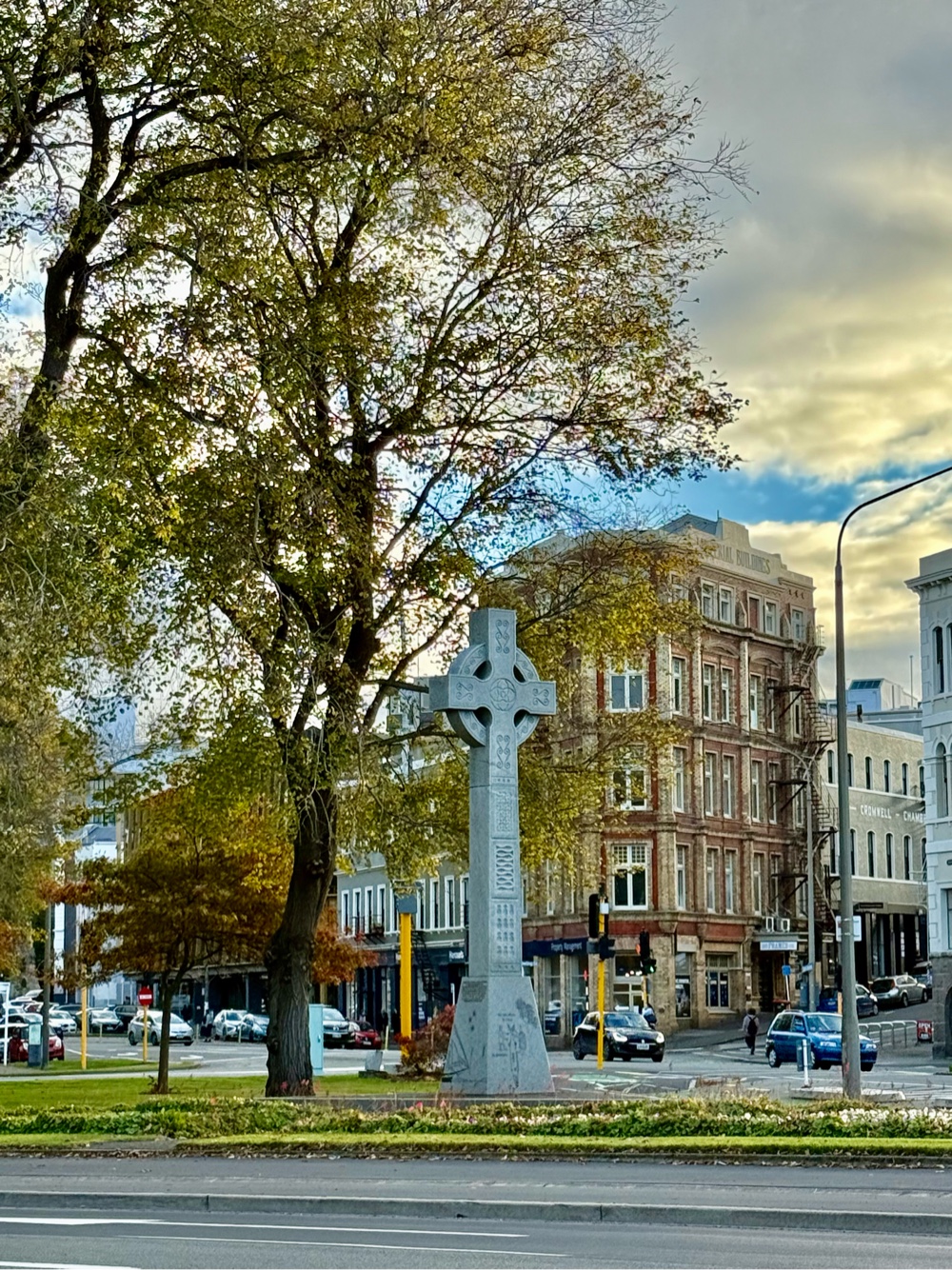
I decided it was time to head back to our hotel. There was a Celtic cross in the park I passed through (which makes sense in this very Scottish city),
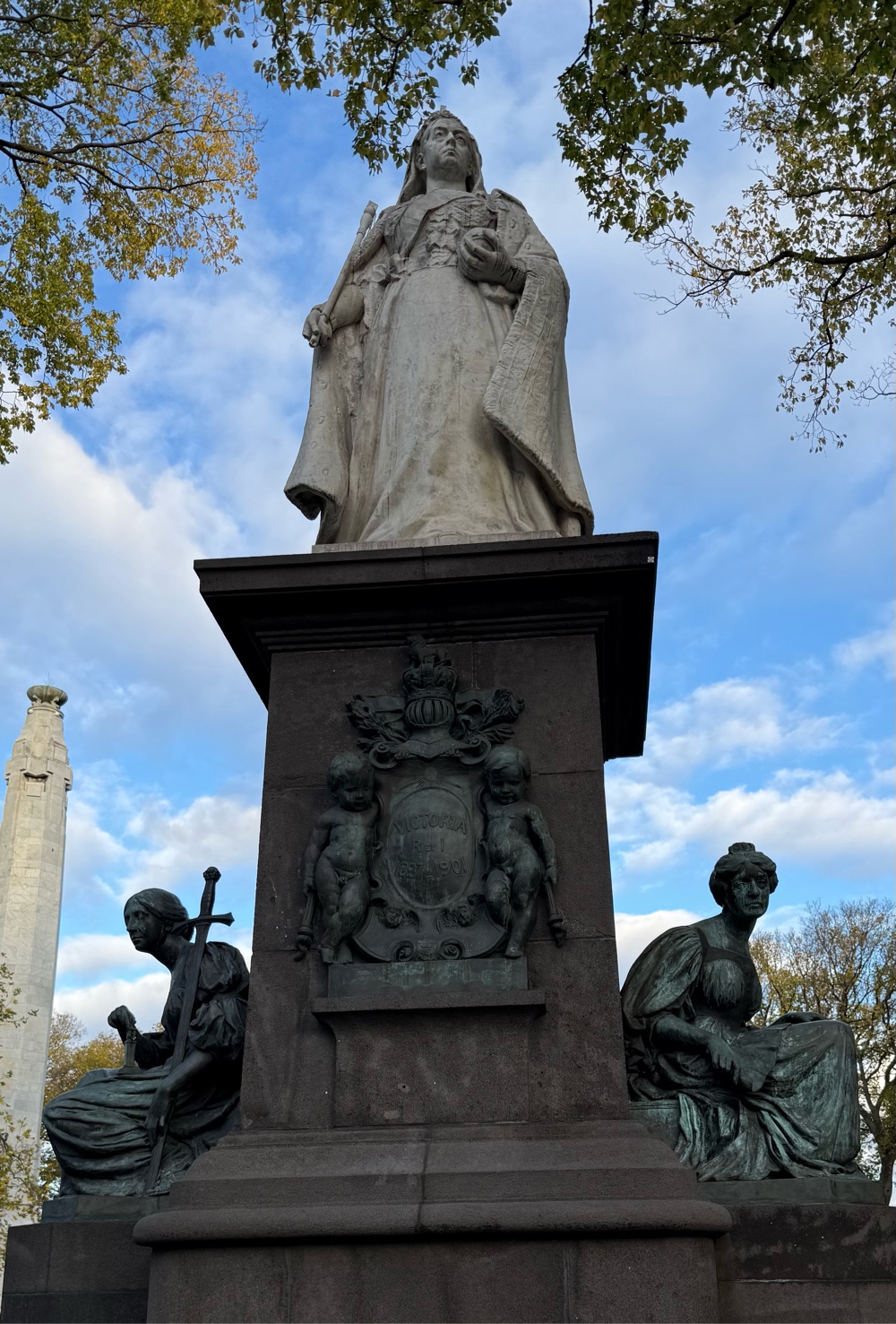
as well as a statue of Queen Victoria, since so many Scots moved to New Zealand when Victoria was queen.
Gayle and I had dinner at Cobb & Company, which is the restaurant in the Dunedin Railway station, in the area where luggage was stored. The building was lovely at night.
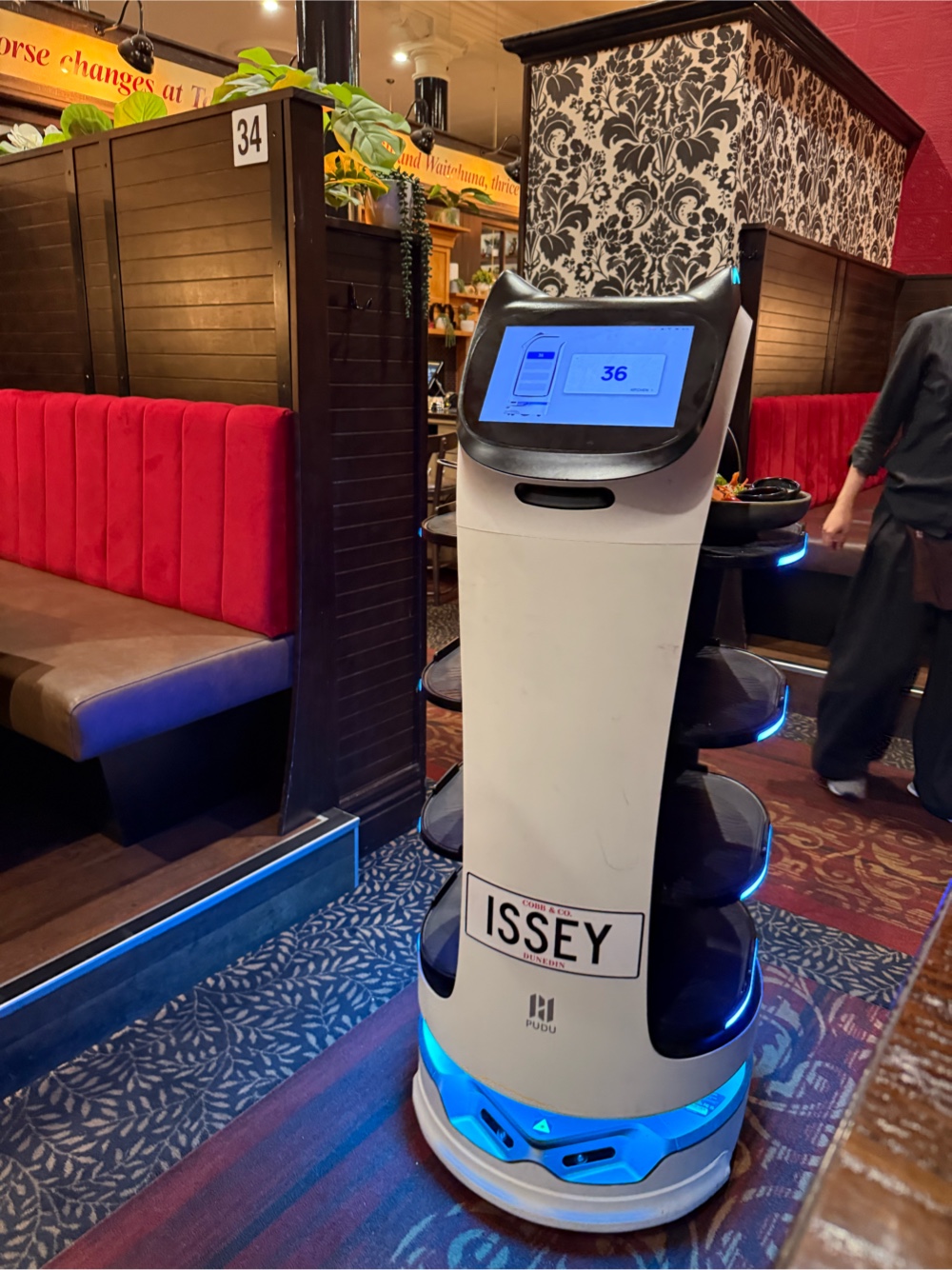
We shared a plate of fish & chips, delivered by Issey, the robot.
We returned back to our hotel to use the free washing machine and dryer (soap provided) in our room. This is such a civilized country!



No comments:
Post a Comment